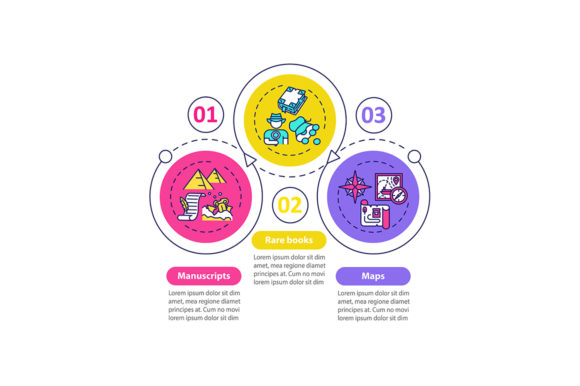
Archive Collections Vector Infographic
First Impressions: A Visual Storyteller for Small Business Branding
The Archive Collections Vector Infographic immediately conveys a sense of structured storytelling. Its clean lines, linear icons, and process timeline chart suggest a design that’s both modern and professional. This graphic design asset feels like a natural fit for brands aiming to communicate clarity, organization, and a narrative-driven approach. Whether it’s for a handmade soap business or a boutique coffee shop, the infographic template offers a visual language that supports a range of brand personalities—from elegant and refined to playful and informative.
Real-World Use Cases: From Packaging to Social Media
As a brand designer, I’ve found that the Archive Collections Vector Infographic can be adapted across multiple touchpoints. For a local bakery, it could serve as a menu graphic highlighting their signature items in a visually engaging way. In a skincare brand’s product packaging, it might be used as a subtle accent to reinforce the brand’s commitment to a step-by-step routine. The asset also works well in social media graphics, where its data visualization elements can help explain a product’s benefits or a service’s process.
- Logo design: Use the infographic’s layout as a framework for a branded icon or emblem
- Product labels: Add a timeline or workflow element to highlight a product’s journey or features
- Packaging design: Incorporate the linear icons as decorative accents on box or bag designs
- Social media graphics: Turn the infographic into a carousel post or story template
- Printable inserts: Use it as a guide or educational element inside product boxes
Supporting Business Presentation: Building Trust Through Design
One of the most valuable aspects of this graphic design asset is how it enhances a small business’s visual presence. When used effectively, it can create a stronger first impression by offering a clear visual hierarchy. For a handmade business, the infographic’s structured layout helps customers quickly understand the value of a product or service. It also contributes to better product recognition, especially when used consistently across packaging, labels, and promotional materials.
Improved customer trust is another benefit. A well-designed infographic can make a brand feel more professional and reliable, which is crucial for local businesses competing in crowded markets. It also helps with shelf appeal—when a product stands out visually, it’s more likely to catch a customer’s eye and encourage a purchase.
Where It Shines: Boutique Branding and Promotional Campaigns
This infographic excels in situations where visual storytelling matters. For a seasonal campaign, it can be used as a hero graphic on a website banner or a flyer promoting a limited-time offer. In a home decor shop, the asset could be incorporated into a printable design for a DIY project or an informational card about a product’s origin. Its versatility makes it ideal for boutique visuals, where each detail contributes to a cohesive brand identity.
The infographic also works well as a product mockup element. Whether it’s part of a packaging design for a candle brand or a label for a food product, it adds a layer of sophistication without overwhelming the design.
When to Be Cautious: Avoiding Overdesign and Clutter
While the Archive Collections Vector Infographic is a powerful tool, it’s not suitable for every situation. In formal corporate branding, where minimalism is key, the infographic’s detailed layout may feel excessive. It should also be used carefully on very small labels or crowded packaging, where space is limited. In areas that require legal information or ingredient listings, the design might compete with essential text, making it harder for customers to read important details.
Low-contrast backgrounds can also diminish the infographic’s impact, so it’s important to test it against different color schemes. Luxury minimalist brands may find the design too busy, while a rustic or handmade aesthetic might benefit from a simpler, more organic style instead.
Practical Designer Notes: Testing and Customization
Before finalizing any use of this graphic design asset, it’s essential to test it on real-world applications. Print a packaging mockup to see how it looks in physical form. Check how it appears in black and white to ensure it remains legible. Preview it on small labels to confirm that details are still visible at reduced sizes.
Testing the infographic with different brand colors is also important. Some colors may enhance the design, while others could clash. Compare it with competitor packaging to ensure it stands out in a positive way. Review PNG transparency if it’s being used on a transparent background, and inspect SVG editability to ensure it can be customized as needed.
Finally, always check the commercial license before using the asset for client work or product sales. Ensure that the design aligns with the brand’s voice and that it doesn’t overpower other design elements like fonts or logos.
Conclusion: A Versatile Asset for Local Business Growth
The Archive Collections Vector Infographic is a versatile and practical design asset that can elevate a wide range of small business projects. Whether used in packaging design, product labeling, or social media graphics, it offers a professional and organized visual language that supports brand identity and customer engagement. By using it thoughtfully and testing it in real-world scenarios, designers can unlock its full potential for local businesses looking to stand out in a competitive market.