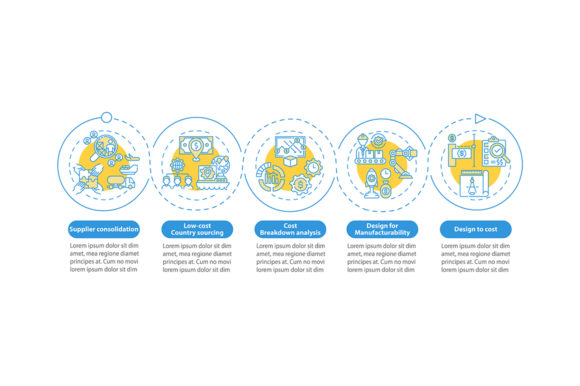
Cost Reduction Strategies Onboarding
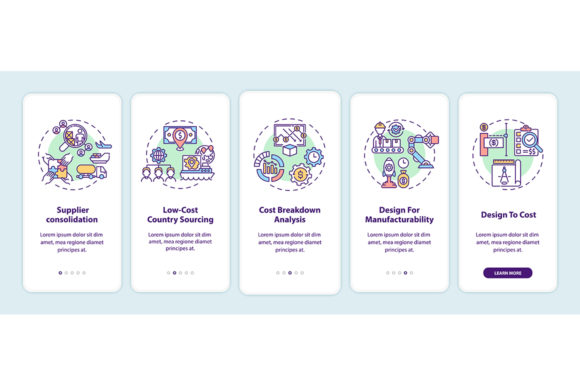
As an embroidery designer and product reviewer, I often find myself evaluating digital assets for their practicality, visual appeal, and real-world usability. Cost Reduction Strategies Onboarding is an infographic-style design that promises to guide users through a five-step supplier consolidation process. But how does it translate into actual embroidery projects? Let’s break it down.
First Impressions: A Clean, Professional Visual Language
From the first glance, Cost Reduction Strategies Onboarding exudes a modern, business-oriented aesthetic. The layout is structured with clear sections, using bold headings and concise text blocks. The use of RGB color illustrations adds a professional touch without overwhelming the viewer. This design feels most at home in a digital workspace or as part of a printable mockup for a small business owner looking to streamline operations.
The vector format ensures scalability, making it ideal for both digital previews and physical applications like embroidered patches or tote bag designs. However, its clean lines and minimalistic approach may not be the best fit for more intricate or decorative embroidery projects.
Real-World Embroidery Use Cases
When considering where to apply Cost Reduction Strategies Onboarding, it’s important to think about the type of project. For custom apparel, such as a sweatshirt or tote bag design, this graphic could serve as a background element or a subtle accent. Its simplicity allows it to blend well with other embroidery elements without clashing.
In a craft business setting, this design might be used as part of a printable mockup or as a digital asset for an Etsy listing. It could also be incorporated into a baby item, like a onesie or blanket, where the message of cost efficiency and organization would resonate with parents looking for practical, handmade solutions.
For commercial embroidery projects, especially those targeting small businesses or startups, Cost Reduction Strategies Onboarding could act as a branding element. It might appear on aprons, caps, or promotional items, reinforcing the idea of efficiency and value.
Where to Be Cautious
Despite its strengths, there are areas where Cost Reduction Strategies Onboarding may not perform as well. On small hoop sizes, the design’s detail could become lost or distorted. Similarly, on textured fabrics or thin materials, the stitch density might not show up clearly, leading to a less-than-polished finished product.
On dark fabrics, the contrast between the design and the background may be insufficient, especially if the RGB colors are not optimized for visibility. This could affect the overall visual appeal and professionalism of the embroidered item.
Curved surfaces like caps or hats can also pose challenges. The design’s linear structure may not conform well to rounded edges, resulting in a stretched or uneven appearance. Tiny lettering or dense stitch areas could become blurred during the embroidery process, reducing clarity and impact.
Impact on Visual Appeal and Customer Perception
When used appropriately, Cost Reduction Strategies Onboarding can enhance the visual appeal of a handmade product. Its clean design adds a sense of professionalism, which can increase customer trust and engagement. For a small shop product or an Etsy listing, this design could help differentiate a brand from competitors by showcasing a commitment to efficiency and quality.
However, if not executed properly, it could detract from the overall look. Poorly placed stitches, incorrect thread colors, or improper stabilizer use could lead to a subpar result. This is why testing the design on scrap fabric before applying it to a final product is essential.
Practical Designer Notes
Before incorporating Cost Reduction Strategies Onboarding into your embroidery project, here are a few key considerations:
- Test on scrap fabric to evaluate how the design looks when stitched.
- Check thread color contrast against the fabric to ensure visibility.
- Review stitch density to avoid issues with thick or thin areas.
- Confirm hoop size to ensure the design fits comfortably.
- Inspect small details for clarity and precision.
- Test in black and white mockups to see how the design translates without color.
- Compare light and dark fabric backgrounds to determine optimal visibility.
- Use proper stabilizer for delicate or stretchy fabrics.
- Verify licensing before selling finished items or digital products.
Final Thoughts: A Useful Asset for the Right Project
Cost Reduction Strategies Onboarding is a well-designed infographic that offers practical insights into supplier consolidation. While it may not be the most ornate or detailed embroidery file, it has clear applications in custom apparel, small business merchandise, and digital product previews.
For embroidery designers, crafters, and Etsy sellers, this design serves as a reminder that even simple graphics can have a meaningful impact when used thoughtfully. Whether you're creating a personalized gift, a handmade product, or a commercial embroidery project, understanding how a design performs in real-world conditions is crucial.
Ultimately, Cost Reduction Strategies Onboarding is best suited for projects that prioritize clarity, professionalism, and efficiency—qualities that can elevate both the design and the final product.